How to connect multiple BofA systems and products to create a unified employee experience.
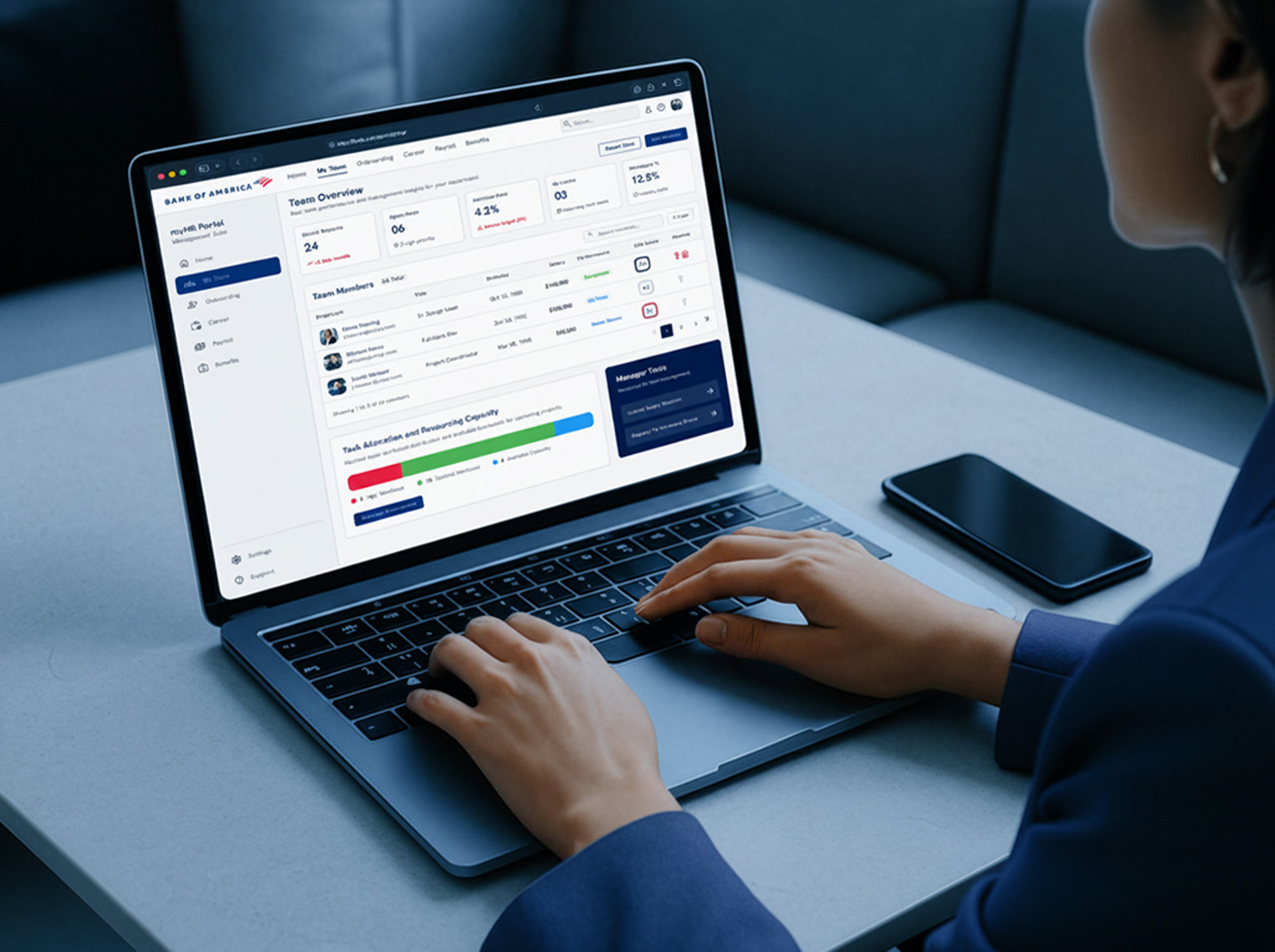
Employee portals are the primary surface for workforce information. The goal of this project was to redesign how employees and managers interact with company resources and information, specifically as pertains to their benefits and compensation.
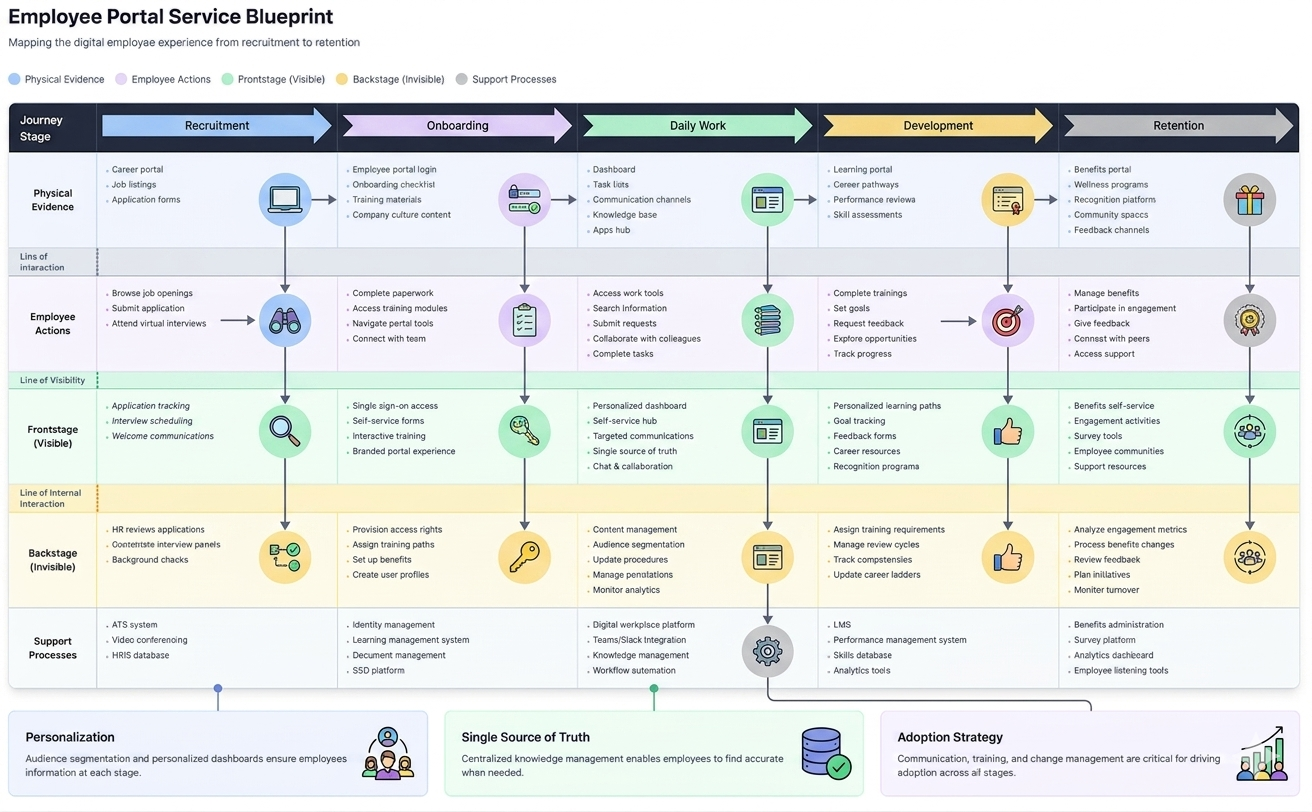
For complex institutions like Bank of America, this integrated framework consolidates workflows, knowledge management, and corporate culture. This map enabled BofA leadership and executives to make informed decisions by seeing how the resulting ecosystem drives daily productivity and builds operational unity across a large global enterprise with distributed teams.
Business Outcome:
Define the future direction of BofA's Employee HR Portal to better support their employees and managers through their careers. The new consolidated portal aligned the experience around valuable, day-to-day information like vacation, benefits, and processes to reduce time-to-value.
Business Impact:
This transition dramatically cut administrative overhead by providing automated and self-service capabilities, freeing up significant working hours for core business tasks. New employee onboarding was accelerated by simplifying internal touch points.
Problem & Context
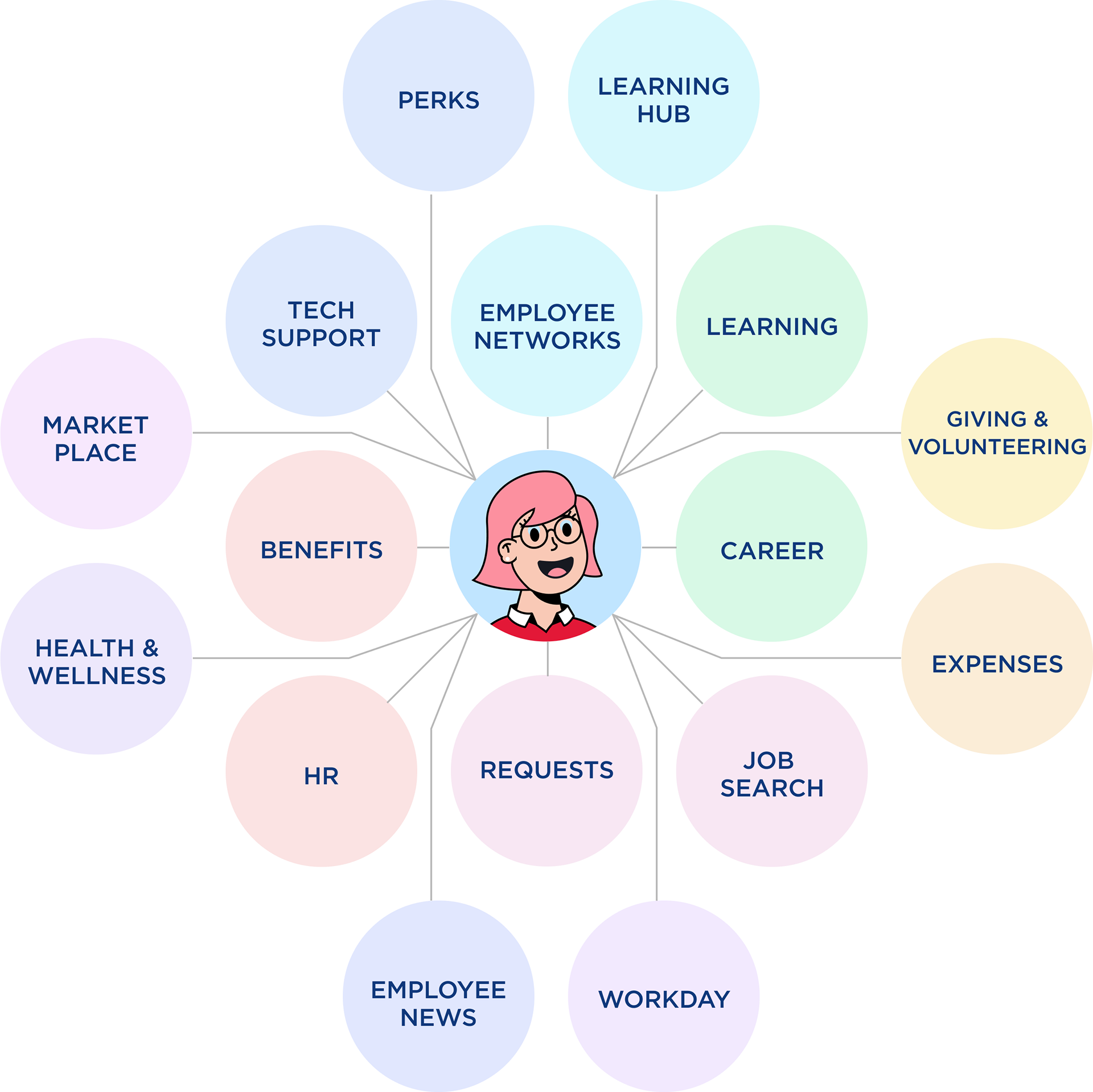
The employee portal was the service-design problem space. 14+ sites existed, usually covering a singular need, and existing as their own island. Employees face constant context-switching between fragmented collaboration apps and separate HR systems, creating a silent drain on productivity. To fix this, internal digital environments must match the sophistication and seamless usability of customer-facing applications.
How do you create a single, reliable source of truth where employee and managers could quickly and easily find information and resources for their needs?
Creating a Service Design Mentality
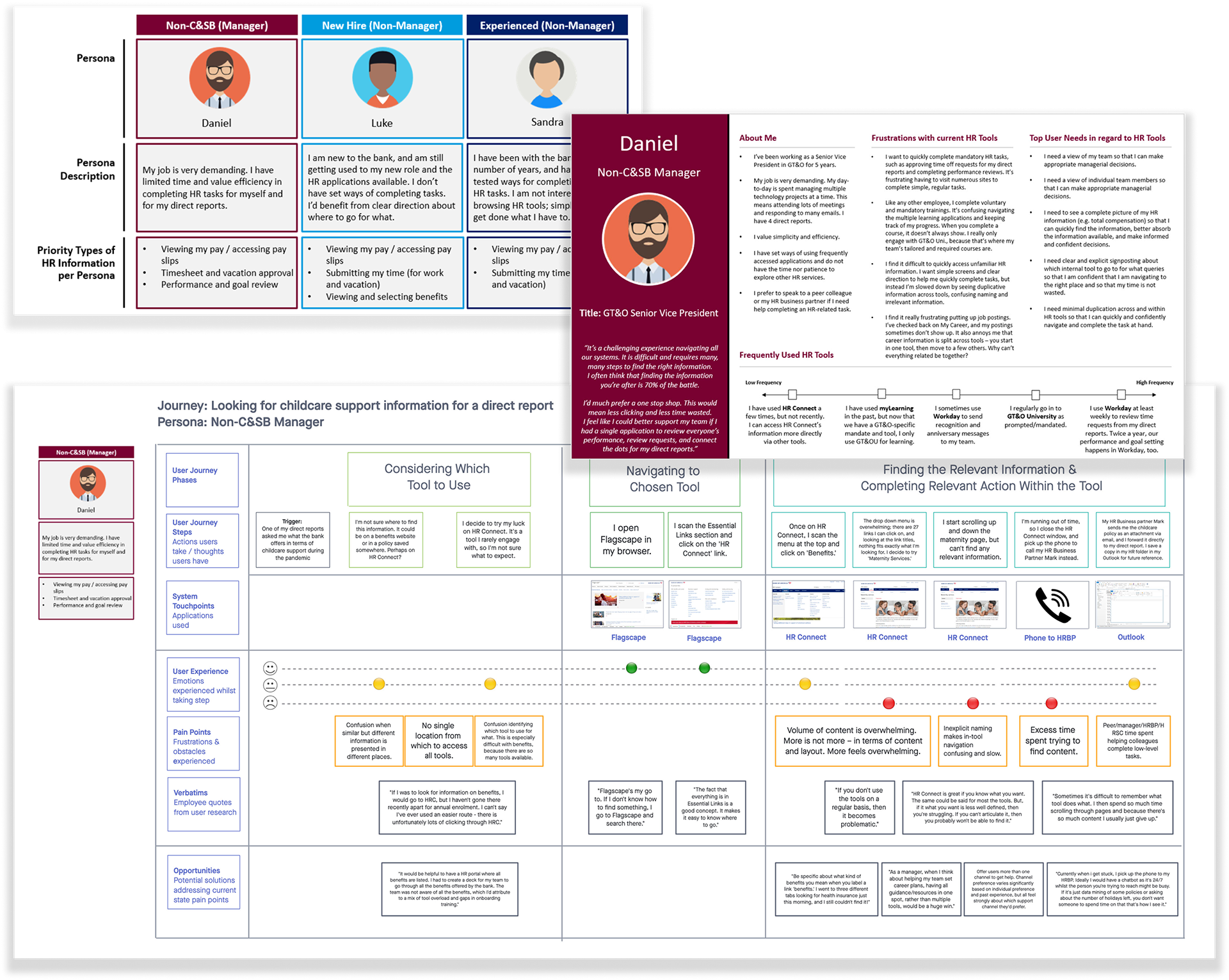
Building an impactful portal requires a user-centric design that categorizes employees by role, geography, and accessibility compliance. Customizing the interface around distinct employee personas prevents information overload and delivers hyper-personalized dashboard updates.
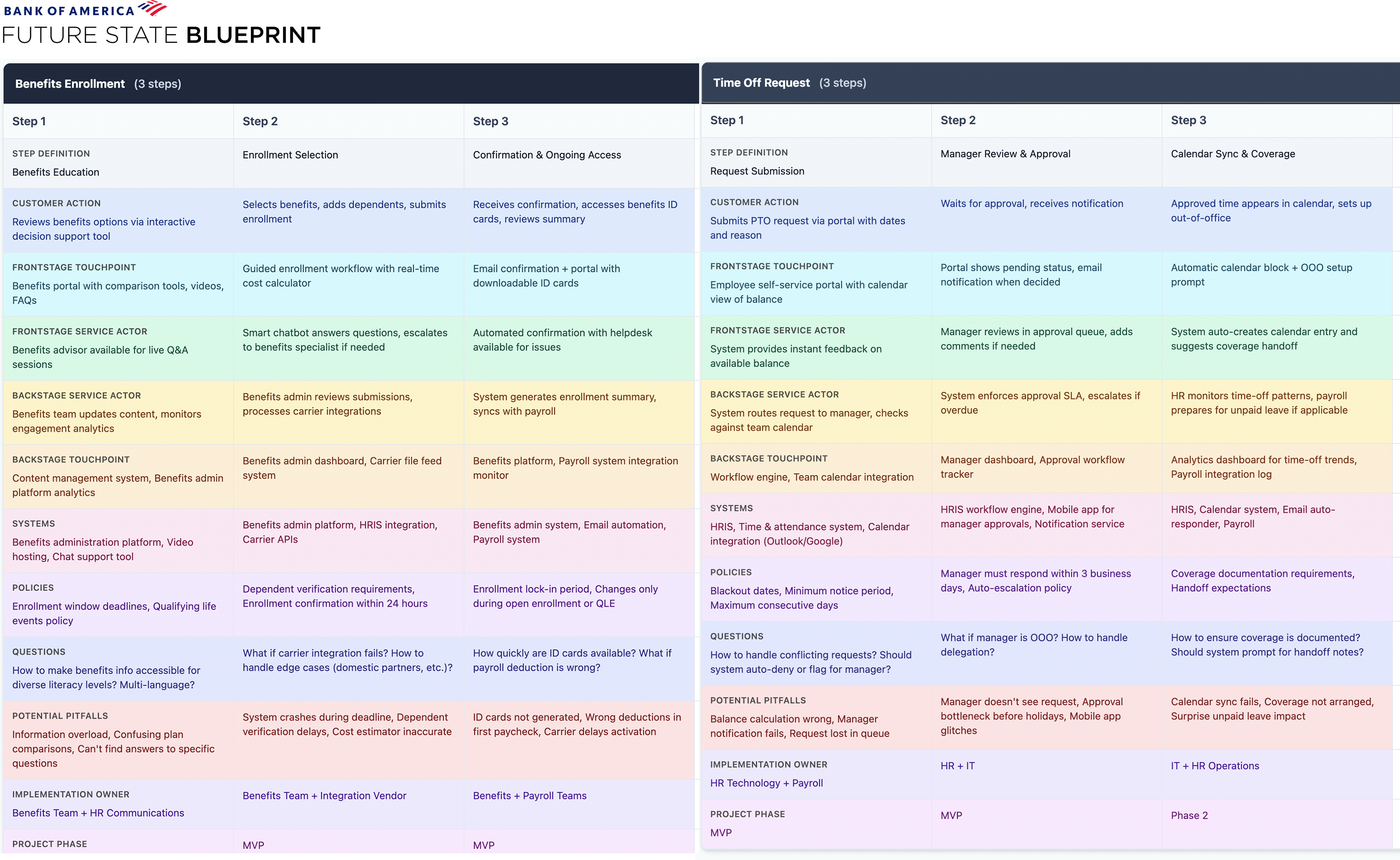
Creation of a future-state Service Design Blueprint and System Interdependency ecosystem map provided a horizontal view at altitude and at ground-level for executives to drive cross-functional alignment and decision-making.
Creating a resilient design also requires a structured, content-first strategy with automated authoring workflows. This system allows managers and employees to easily update and edit information, ensuring the portal remains a trusted, single source of truth.
Methodology
Orchestrating the End-to-End Service Ecosystem: Directed a holistic service design strategy to map the complete, cross-functional employee and manager journeys. By translating complex, multi-layered touch points, user roles, and backstage dependencies into an actionable Service Blueprint, user needs were successfully aligned with front stage surfaces, operational processes, and enabling systems to create a unified digital ecosystem.
Facilitation of user interviews: Cross-functional work sessions and design sprints helped refine and iterate future-state opportunities. This allowed for identification of potential capability gaps and to provide guidance on approaches for content, data, and architecture. A standardized system of reusable widgets and data forms was created to ensure a consistent, flexible design layout.

Leadership Approach
Optimized Workshop Facilitation & Readiness: Maximized cross-functional collaboration with clear pre-reads, sprint planning, and target examples that empowered participants to contribute immediately while balancing diverse team dynamics under strict time boxing.
Actionable Alignment via Service Artifacts: Translated complex session discussions into immediate, shareable outputs—such as ecosystem maps, service blueprints, and core decision logs—enabling project teams to maintain strategic momentum across distinct business lines.
User-Centric Change Management: Orchestrated a culture-first adoption strategy that empowered decentralized content authors with intuitive page tools while establishing continuous end-user validation to overcome tool resistance and ensure long-term platform viability.
Impact
Deploying a modern employee portal replaces manual workflows with immediate, self-service utilities like benefits management, expense reporting, and time-off. This frictionless environment directly drives daily productivity and internal collaboration.
Ultimately, the portal serves to unite different lines of employee and manager processes under a single, intuitive platform, meeting the needs of BofA's internal workforce.
In its first quarter of deployment to the initial user group, CSAT rose by 26% (from 63%) and time-to-task completing dropped to under 4 minutes (from 10+ mins.)
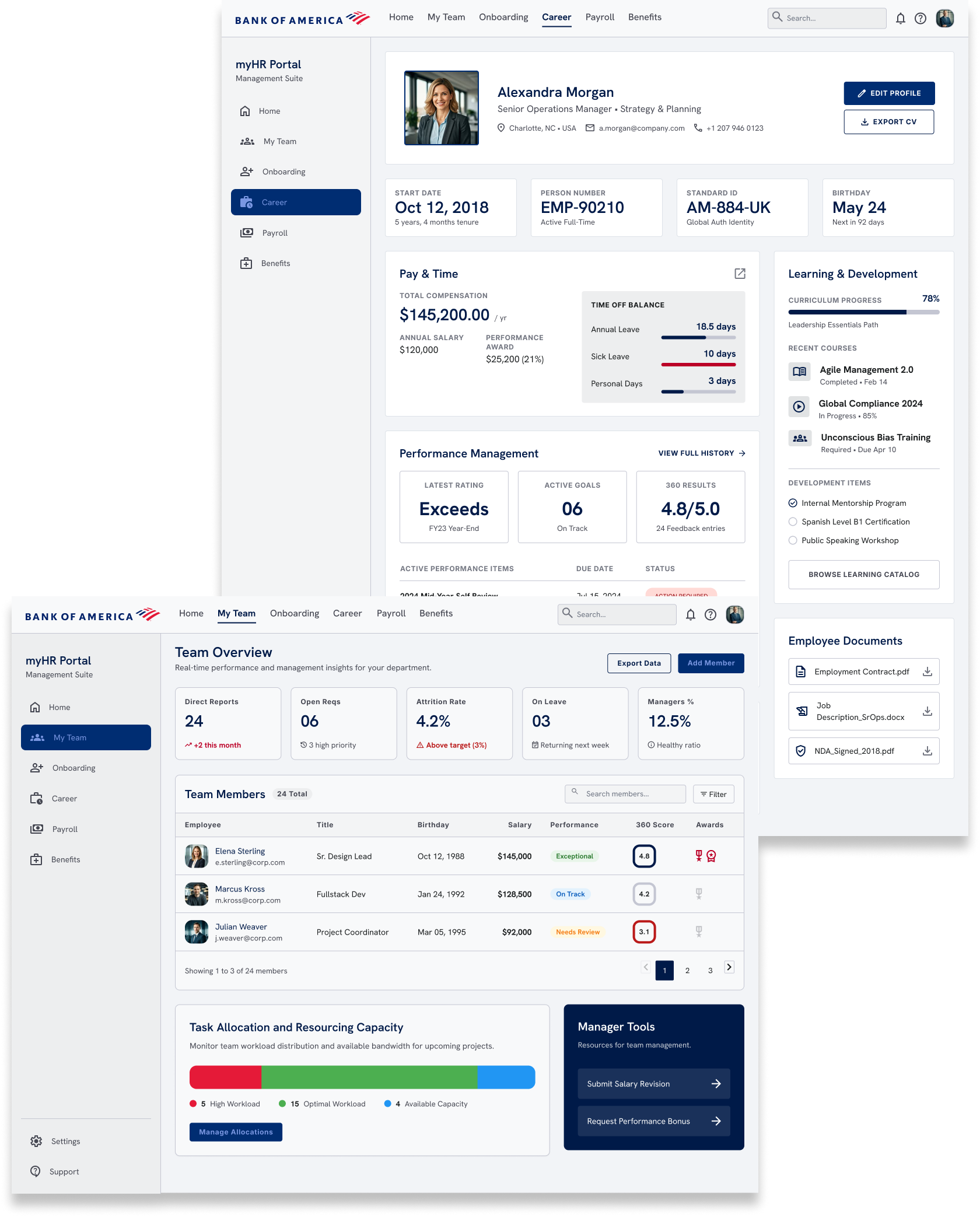
Employee and Manager views